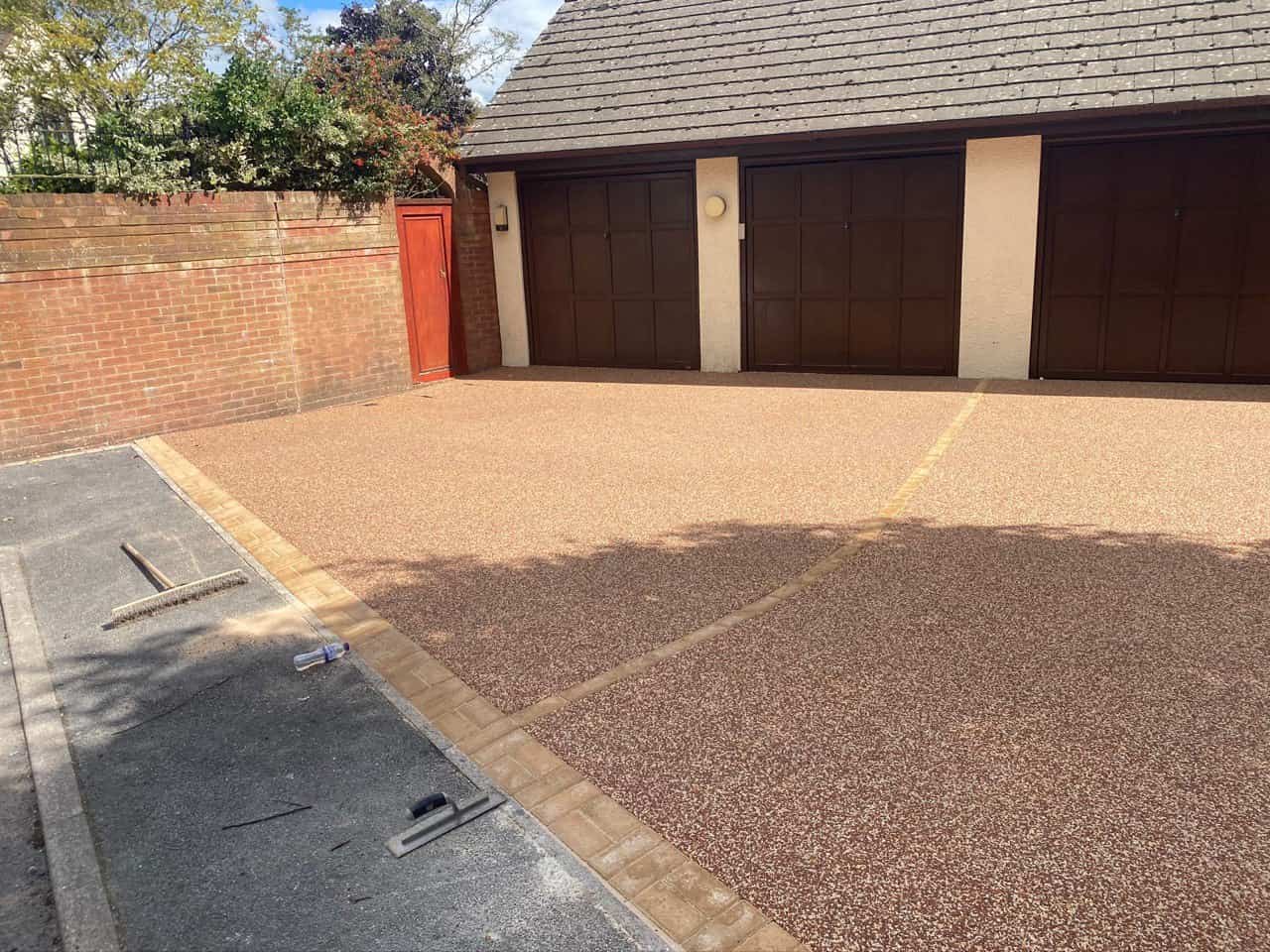
What Are the Biggest Benefits of a Resin Driveway?
Choosing a new driveway involves more than deciding which surface looks best. A driveway is used regularly, forms a prominent part of the property’s exterior and needs to provide a practical surface for vehicles and pedestrians. Resin-bound surfacing has become a popular option because it combines decorative aggregate with a firm, continuous finish.
A resin-bound driveway is created by mixing selected aggregate with resin before the material is laid onto a suitably prepared surface. Once installed correctly, the individual stones are held together within the resin rather than remaining loose. This gives the driveway the appearance and texture of aggregate while creating a stable surface for everyday use.
For homeowners in Burwell, Cambridgeshire, the benefits of a resin driveway can include its attractive appearance, smooth finish, design flexibility, straightforward maintenance and ability to create a coordinated entrance to the property. However, achieving these advantages depends heavily on correct preparation and professional installation.
Why Choose a Resin Driveway for Your Property?
A professionally installed resin-bound driveway can offer several practical and visual advantages, including:
- A smooth and consistent finished surface
- A wide choice of aggregate appearances
- No loose stone spreading across surrounding areas
- Good suitability for regular pedestrian and vehicle use
- Flexibility when designing shapes and borders
- A neat transition between different outdoor areas
- Straightforward routine maintenance
- Potential permeability when the complete construction is designed accordingly
- An attractive finish that can complement different property styles
These advantages make resin a versatile driveway option, but the finished surface is only as dependable as the preparation and supporting construction beneath it.
A Resin Driveway Creates a Smart, Consistent Finish
One of the most noticeable benefits of resin-bound surfacing is its appearance.
Because the aggregate and resin are mixed before installation, the finished driveway forms a continuous surface rather than being constructed from separate paving units or loose stones.
This can create a particularly clean and coordinated appearance across larger driveway areas.
The lack of obvious joints can also help the driveway feel visually spacious, particularly where a simple layout and carefully selected edging are used.
There Is a Wide Choice of Aggregate Appearance
Resin-bound driveways can be created using different aggregate blends, providing flexibility when selecting the overall character of the surface.
The choice of aggregate influences the colour, texture and visual impression of the finished driveway.
This allows the surface to be considered in relation to the property itself rather than chosen independently.
For example, the aggregate can be selected to complement existing walls, boundaries, pathways and other hard landscaping. This helps the driveway appear integrated with its surroundings rather than simply added in front of the property.
Resin Provides the Appearance of Aggregate Without Loose Stone
Loose aggregate can provide an attractive driveway finish, but the individual stones naturally remain movable.
Vehicle tyres, regular walking and general use can gradually redistribute loose material. Stones may move towards boundaries or adjoining surfaces and require occasional repositioning.
With resin-bound surfacing, the aggregate is mixed with resin and held together within the finished layer.
This retains much of the visual character associated with decorative stone while providing a firm surface underfoot and beneath vehicles.
A Firm Surface Can Make Everyday Access Easier
The continuous nature of resin-bound paving can make movement across the driveway straightforward.
There are no loose stones to move significantly under normal use, while the relatively consistent finish can provide a practical route between parked vehicles, entrances, gates and adjoining paths.
This can be particularly useful where the driveway also acts as the main pedestrian approach to the property.
Good driveway design should consider walking routes as well as vehicle parking. A surface that works effectively for both can make the entire entrance area more convenient.
Resin Can Work Well for Irregular Driveway Shapes
Not every driveway is a simple rectangle.
Some need to follow curved boundaries, accommodate planting or connect with paths and other garden features.
Resin-bound surfacing can be formed to suit a range of layouts. This provides useful flexibility where the driveway needs to respond to the shape of the available space rather than forcing the design into rigid lines.
Careful planning remains important. Curves and changes in shape should have a practical purpose and contribute to a coherent overall layout.
Borders Can Add Definition
A resin driveway does not have to consist of one uninterrupted area of the same material.
Borders and edging can be incorporated to define the shape of the driveway and create clear transitions with neighbouring surfaces.
These details can also help distinguish parking areas, pedestrian routes or the edges of planting.
The most successful designs tend to use borders deliberately rather than adding unnecessary visual complexity. A well-proportioned edge can give the resin surface a defined finish while complementing the wider property.
Resin Can Connect a Driveway With Paths
Where the driveway leads into a side path or garden route, resin-bound surfacing can help create visual continuity.
The same or complementary aggregate can potentially be used to connect different areas, helping the outside of the property feel more coordinated.
This can be especially effective where homeowners want the driveway and surrounding landscaping to appear as part of one planned scheme.
The construction of each area should still reflect its intended use. A driveway carrying vehicles has different supporting requirements from a path intended mainly for pedestrians.
Resin Can Also Coordinate With Patio Areas
The versatility of resin-bound surfacing means it can be considered beyond the driveway itself.
Where appropriate, complementary finishes can be incorporated into paths and patio areas to create a consistent visual theme across the property.
This does not mean every hard-landscaped area needs to look identical.
Different borders, shapes and surrounding landscaping can distinguish individual spaces while the aggregate finish provides a visual connection between them.
A Well-Planned Resin Driveway Can Improve the Entrance Layout
A new driveway provides an opportunity to reconsider how the front of the property functions.
The layout can take account of vehicle movement, pedestrian routes, boundaries, planting and connections with the entrance.
This is an important advantage because simply replacing an old surface without reconsidering the layout can preserve existing inconveniences.
Professional planning can identify whether the driveway shape, access routes or transitions could be improved before the new resin surface is installed.
Permeability Can Be an Important Characteristic
Resin-bound surfacing contains interconnected spaces between the aggregate particles, meaning the finished layer itself can be permeable.
However, it is important to understand that the complete driveway construction determines how water is managed.
A permeable resin surface placed over unsuitable underlying construction does not automatically make the entire driveway permeable.
The base, ground conditions, levels and surrounding areas therefore need to be considered together when planning drainage.
Surface Levels Can Be Designed Around Water Movement
Good drainage depends on more than the surface material.
The levels of the driveway influence where rainfall travels and how the surface connects with adjoining areas.
During professional preparation, these levels can be established before the resin-bound finish is installed.
This helps avoid inappropriate low points and creates suitable transitions between the driveway and neighbouring paths, boundaries or landscaping.
Drainage should therefore be considered from the beginning rather than addressed after the driveway has already been laid.
Resin-Bound Driveways Are Relatively Straightforward to Maintain
A properly installed resin-bound driveway generally requires straightforward routine care.
Leaves, soil and other debris can be removed regularly to prevent unnecessary accumulation. Organic growth should also be addressed before it becomes established.
Keeping the surface clear helps preserve its appearance and ensures that relevant drainage routes continue to function effectively.
Like any external surface, resin should not be considered completely maintenance-free. Regular basic care is preferable to allowing substantial build-up to develop over time.
There Are No Individual Paving Joints Across the Main Surface
Unlike surfaces made from individual paving units, resin-bound surfacing forms a continuous layer.
This creates a different maintenance and visual characteristic because the main driveway is not divided by a regular pattern of individual joints.
The result can be particularly appealing to homeowners who prefer a smoother, less segmented appearance.
Borders can still be incorporated where desired, allowing definition without creating joints throughout the entire main surface.
The Surface Can Complement Modern and Traditional Properties
Resin-bound surfacing does not have one fixed appearance.
The choice of aggregate, borders and overall layout can significantly change its character.
A carefully selected finish can therefore work with a range of property styles.
The key is to choose the surface in relation to the building and its surroundings. Aggregate that complements existing materials generally produces a more considered result than selecting a driveway finish without reference to the wider property.
Good Edging Helps Maintain a Defined Finish
Edge restraint is an important part of a resin-bound installation.
It helps establish the boundary of the surface and creates a clear transition between the driveway and surrounding lawns, planting or other materials.
Edging also influences the overall appearance.
Straight boundaries can produce a crisp formal finish, while carefully planned curves may suit a softer garden layout. The appropriate choice depends on the shape and character of the property.
Resin Can Refresh a Tired Entrance
An ageing driveway can affect the appearance of the entire front of a property.
Cracking, uneven sections, loose materials or a layout that no longer works effectively can make the entrance feel neglected even when the surrounding property is well maintained.
Installing a new resin driveway provides an opportunity to address both appearance and functionality.
Rather than simply covering an old surface, professional preparation allows the existing condition to be assessed and the new driveway planned around how the area needs to perform.
The Base Is Fundamental to the Benefits of Resin
The advantages of resin-bound surfacing depend heavily on what sits underneath it.
A decorative resin finish cannot compensate for an unstable or inadequately prepared base.
If the supporting construction moves significantly, sinks or develops substantial cracking, the finished surface above can also be affected.
This is why professional installation begins with assessing the existing area and determining what preparation is required before the resin mixture is laid.
Existing Surfaces Need to Be Assessed Properly
In some circumstances, an existing surface may provide a suitable foundation for further work.
However, suitability should never simply be assumed.
Cracks, movement, settlement and other deterioration need to be considered before installing a new resin-bound finish.
Placing a high-quality surface over an unsuitable base can leave the original weakness unresolved.
A professional assessment establishes whether existing construction can appropriately form part of the new installation or whether additional preparation is required.
Professional Installation Helps Achieve a Consistent Finish
Resin-bound surfacing requires careful preparation and installation.
The aggregate and resin need to be prepared appropriately, while the material must be laid consistently to achieve the intended depth and finish.
Working areas also need to be planned so that the completed surface appears uniform.
These details are particularly important because resin forms a continuous visible finish. Inconsistencies in preparation or installation can therefore become noticeable across the completed driveway.
A Resin Driveway Should Be Designed Around How It Will Be Used
A driveway is not simply a decorative area in front of the house.
It needs to accommodate regular vehicle movements, parking and pedestrian access. Turning areas and frequently used sections can place different demands on the construction.
Professional planning considers these requirements before determining the appropriate preparation.
This helps ensure that the driveway is designed as a functional vehicle surface first, with its decorative appearance forming part of the complete solution.
Why Professional Preparation Adds Long-Term Value
Many of the most important parts of a resin driveway become invisible once installation is complete.
Ground preparation, supporting construction, levels and edging may receive little attention when homeowners look at the finished surface, yet they play a major role in its performance.
At Burwell Driveways, we consider the condition and intended use of the area before determining an appropriate preparation and surfacing approach.
For homeowners in Burwell, Cambridgeshire, this means the focus is not simply on producing an attractive resin finish, but on creating a driveway where the visible surface is supported by properly considered construction underneath.
Conclusion
The biggest benefits of a resin driveway include its smooth and consistent appearance, wide choice of aggregate finishes, firm surface, design flexibility and ability to connect effectively with surrounding paths and landscaping. Resin-bound surfacing can also provide a practical alternative for homeowners who appreciate the appearance of decorative aggregate but do not want loose stone moving across the driveway.
However, the quality of the finished resin surface depends heavily on correct preparation. A stable base, suitable levels, effective drainage considerations and carefully planned edges are all essential to achieving the intended result.
If you are considering a resin driveway for your property in Burwell, Cambridgeshire, contact Burwell Driveways. We can assess the existing area and recommend an appropriate driveway approach based on the condition of the site and how you intend to use the space.
Call us on: 01638 597 108
Click here to find out more about Burwell Driveways
Click here to complete our contact form and see how we can help with your driveways.